Thursday, February 25, 2016

Wagner's Love for Cosima

This month on Clef Notes we’ve been looking at love and classical music. Today, let’s look at a famous composer who has a very famous love story: Richard Wagner. Over the course of his life, Wagner had multiple mistresses and even a first wife, but it was Cosima von Bulow who seemed to be the one for whom his soul truly desired. When they married in 1870, they remained together until his death in 1883.

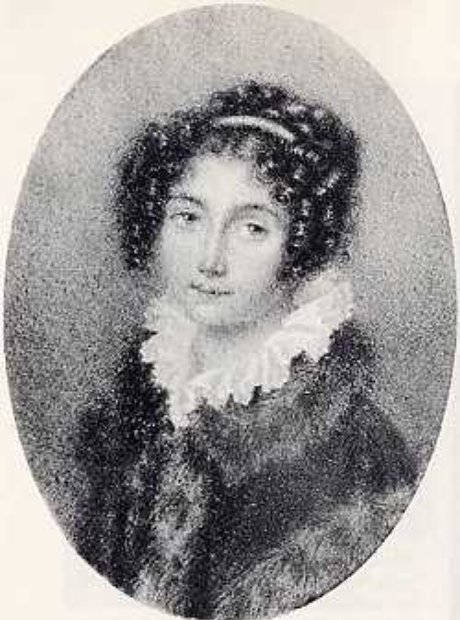
But just who is Cosima von Bulow? Cosima was the daughter of Franz Liszt, the second of three children born by his mistress, Countess Marie d’Agoult. During their late teenage years, Cosima and her sister were put in the care of one of Liszt’s friends, the mother of a former pupil and rising musician, Hans von Bulow. Hans was a pianist and conductor and a champion for the music of both Liszt and Wagner. Not long after their meeting, Hans decided to request Cosima’s hand in marriage. The young girl was ecstatic to have someone love her after growing up with feelings of abandonment by her own parents. Hans, perhaps, was intrigued by the idea of building his association with Liszt. After their marriage, it is interesting to note that one of the first things young Hans did was take his new bride to visit his dear friend and colleague, Richard Wagner.

Courtesy of wikimedia.org 
After years of an unhappy marriage and frequent meetings with Wagner as a family friend, the daughter of Liszt and the legendary composer realized their love for one another. Their union did not come easy, however. Hans was understandably not thrilled with the love affair between his wife and friend and refused to agree to divorce. It wasn’t until Cosima bore three of Wagner’s children that Hans finally agreed and Cosima was united to Wagner in marriage in 1870. Did you know that Wagner and Cosima’s three children were named Isolde, Eva, and Siegfried—all three names from Wagner’s operas?

Following the marriage, Wagner wrote his famous Siegfried Idyll for Cosima on her birthday. You can listen to this work below:


Tuesday, February 23, 2016

Beethoven's Immortal Beloved

Beethoven’s Immortal Beloved—a mystery that scholars have been trying to solve for decades. This month on Clef Notes we’re exploring love and its relation to classical music and composers. Today, let’s look at Beethoven and the woman who will forever be labeled his “Immortal Beloved.”

When Beethoven passed away in 1827, his brother and several friends found a letter among his belongings. It contained no year, location, or addressee. It did, however, contain passionate lines written to someone for whom the composer must have felt deeply:

“My angel, my all, my very self…”
“Though still in bed, my thoughts go out to you, my Immortal Beloved—I am resolved to wander so long away from you until I can fly to your arms and say that I am really at home with you, and can send my soul enwrapped in you into the land of spirits.”
“Oh continue to love me—never misjudge the most faithful heart of your beloved…”

Beethoven’s Immortal Beloved has been a subject of musicological research for years. In the 1950s, the analyzing of a water mark on the paper estimated that the note was composed in 1812. Records state that at that time, Beethoven was in a Bohemian spa town known as Teplitz. Though scholars have disagreed over the years in just who this woman may be, there are several popular candidates.

Some consider Countess Julia Guicciardi a viable candidate. Beethoven’s former piano student, he dedicated his famed “Moonlight” Sonata to the girl. It is known that he did love her however her father did not approve of the relationship.

Julia Guicciardi [Courtesy of https://wikimedia.org]
What about Josephine Brunsvik? She also studied with Beethoven at one point. Though married to Count Josef Deym, Josephine maintained correspondence with the composer following her husband’s death. Beethoven once referred to her as his “only Beloved” in a letter.

Josephine Brunsvik [Courtesy of http://assets4.classicfm.com]
Lastly, and probably the most popular candidate, it’s Antonie Brentano, wife of Beethoven’s friend Franz Brentano. For years, many people didn’t believe it was possible for Beethoven to love the wife of his dear friend in such a way. But in the 1970s, scholar Maynard Solomon shed some light on the situation, claiming both Beethoven and Antonie were at the same hotel in Prague just days before the letters were written, according to the hotel registry. Interesting.

Antonie Brentano [Courtesy of https://wikimedia.org]


These are just three of many potential “Immortal Beloveds” whom have been considered over the years. Will we ever know exactly who Beethoven addressed in his 1812 letter? One can only speculate.

Thursday, February 18, 2016

Love in Gluck's Orfeo and Euridice

The love story of Orfeo and Euridice is one that has inspired composers for centuries. You may be familiar with Monteverdi’s take on the tale, or perhaps Rossi? My personal favorite is one by Christoph Willibald Gluck. Written in 1762, Gluck’s version of Orfeo is in the style of reform opera—a movement that encouraged the music to serve the text, moving the plot forward by writing less contrast between recitatives and arias and including less opportunity for soloists to show off. He wrote the opera alongside poet Raniero de Calzabigi.

Are you familiar with the tale of Orfeo and Euridice? Gluck’s setting tells of Orfeo’s beloved Euridice who dies of a snake bite. When Orfeo hears the news, he is devastated and gets permission from the gods to travel to the underworld to retrieve his bride. He is permitted to embark on this journey under the condition that, once there, he must not look at Euridice as she follows him back to Earth. If he disobeys this command, he will lose his lover forever.

After arriving in the underworld, Euridice comes to Orfeo. When she notices that he will not look at her, she fears he no longer loves her. Overcome with grief, Orfeo turns toward her in order to express his passion and immediately, she is taken from him. In despair, Orfeo decides to take his own life, unable to live without Euridice. Realizing that Orfeo’s love is genuine, the god Amor decides to allow Euridice to return to Earth with Orfeo.

Below you can listen to the Dance of the Furies from Act II of Orfeo and Euridice. Note how Gluck uses string tremolos, horns, trombones to depict the Furies in the underworld while Orfeo is represented by a harp and plucked strings, in reflection of the lyre he carries.