Today, WGUC takes this opportunity to thank all of our faithful Clef Notes readers for taking time from your days to enjoy the interviews, reviews and other posts we have shared with you.
With the return of our Cincinnati Spotlight segment, now featuring all three of our weekday hosts, we are bringing the curtain down on Clef Notes. As we all know, there are only so many hours in a day, but it has been our distinct pleasure to share these writings and recordings with you through the years.
Please join us for Cincinnati Spotlightweekdays at 10 a.m. and 5 p.m. to hear about upcoming arts experiences in the area. We hope that when you feel comfortable, you’ll be able to return to the theatres and concerts and galleries and museums. While the world has changed, our need for cultural fulfillment has not. 90.9 WGUC will be here for you with the very best classical music, and we’re so proud to help the arts community by sharing their efforts through Cincinnati Spotlight.
With final thanks and happy holiday wishes from the Clef Notes team: Jessica Lorey, Brian O’Donnell, Elaine Diehl and Andy Ellis.
Jazz is alive and well and living in Cincinnati – but we can NEVER take it for granted!
As we re-launch Cincinnati Spotlight on 90.9 WGUC, we re-connect with friends who are out there, day after day, night after night, keeping our precious Jazz Scene going. I’ve had the opportunity to speak with club owners, Brent Gallaher (Café Vivace) and Zarleen Watts (Schwartz’s Point) and musician/music booker for Washington Platform, Michael Sharfe over the past few weeks. They each report toughing it out through the worst days of the pandemic, when their doors were shut, and the long, slow climb back. You’ll be hearing from them in the days and weeks to come on Spotlight, weekdays at 10:00am and 5:00pm, and on our website at wguc.org/spotlight.
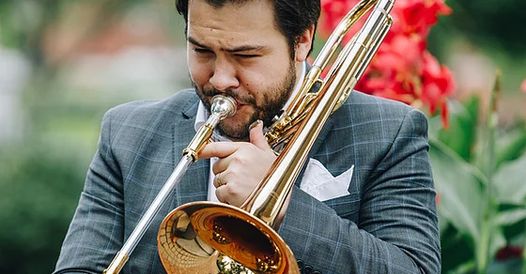
I also spoke with one of the hardest-working musicians in town, Trombonist Zachary Granger (The Wild Magnolias, Cincinnati Contemporary Jazz Orchestra, the Sly Band and many, many more) about his perspective on the State of Jazz in late 2021... here’s a bit of our conversation:
How's the gigging?
Gigging is great! I would say that for performing musicians, work has pretty much entirely come back. I just had the busiest week since gigs have come back; 5 jazz shows in 4 days!
Are people coming out?
People are coming out in droves. Audiences are not only coming out in greater numbers, but they are also staying, listening longer and being more respectful. I think people really missed live entertainment, music especially, and they seem much more grateful to have something that was taken from them for almost 2 years.
How are musicians doing - do you know any who gave up music and got "real" jobs during the pandemic?
It’s actually a bit of a mixed bag with the musicians. There are people like me who are doing better than ever and are happy to have any kind of work they can get. And there is a whole other group of working musicians, like a lot of them, that still haven’t recovered. Musicians who had plans to move to other states only to arrive and not have any opportunities. Musicians who decided they were going to go back to school to get a teaching job somewhere and then paid tuition and signed up for classes only to have those job offers/prospects evaporate because of lockdowns lasting 3-5 semesters. I had a friend that bought a house only to sell it 7 months later because he couldn’t pay for it; no gigs, and less than half of his students signed up for virtual lessons. I might be one of the best cases of someone who got a “real job”. I saw that at the music store I was teaching at could use some extra help and I asked for a job. Now I’m an instrument repair man! Its music related in an indirect sort of way but I couldn’t be happier to have more things to flesh out my schedule.
What else needs to happen, in your opinion, to revive live music?
In my humble and heavily biased opinion, I think what everyone needs to do (in all aspects of public life) is to take this pandemic as seriously as it ever was. Feeling sick? Stay home and get a Covid test. Want to hear some live music and finally enjoy a night out with your friends? Respect if a business asks you to put a mask on or has reduced/assigned seating. Realize that you might be young and healthy but that everyone of the people you see have loved ones and families and that some of those people in those families could be high risk. I’m a huge fan respect; don’t make fun of someone for wearing a mask, don’t be upset if someone doesn’t want to shake your hand or give you a hug, and most importantly: just don’t be gross! Wash your hands, don’t share drinks, etc.
We all just want everything to stay open. I love what I do for a living and performing is a privilege and on the behalf of all musicians, I ask that everyone still take this pandemic seriously.
Stay connected with the Arts in Cincinnati through Cincinnati Spotlight at 90.9 WGUC.
Thanksgiving is this Thursday, and WGUC offers a few special programs filled with beautiful music to accompany the holiday. Turn your radios to 90.9 while cooking dinner or visiting with family and friends. You can also listen online at wguc.org via the WGUC app or your smart speaker.
Here’s a list of what to expect:
Wednesday, November 24, 8 p.m. Every Good Thing: On Thanksgiving, host Andrea Blain and classical music fans from all around the country take some time to give thanks and celebrate one of life's most meaningful gifts: music.
Thursday, November 25, 10 a.m.A Feast for the Ears: Traditional music and American composers take center stage as host Mark Perzel presents a warm, heartfelt celebration of the Thanksgiving holiday. It's the perfect accompaniment for your Thanksgiving morning activities.
Thursday, November 25, 6 p.m.Giving Thanks: Giving Thanks sounds the way Thanksgiving feels: inviting, warm, and festive. It's a contemporary, thoughtful celebration of the spirit of the holiday. Special guests Stanley Tucci and Naomi Shihab Nye join our Thanksgiving table, and music from Eric Whitacre, Bach, Copland and more complete the scene.
What's your favorite music for this season? Do you prefer something folksy like Stephen Foster's Old Folks at Home or perhaps a jubilant march like John Philip Sousa's Stars and Stripes Forever? Maybe you're an Aaron Copland fan or perhaps Cole Porter or Duke Ellington. Whatever your taste, we hope you'll join us in counting blessings and sharing in our country's rich musical history.
Whatever your taste, we hope you’ll join us in counting blessings and sharing in our country’s rich musical history.
This Sunday evening, November 21. WGUC is excited to bring you our exclusive recording of the Cincinnati Symphony Orchestra's Classical Roots concert, recorded in August 2021.
This concert celebrated the 20th anniversary of the Classical Roots program, which brings together the musicians of the CSO with 150 singers from local churches in a musical exploration of the rich history of African American music. With selections ranging from Florence Price's Concerto in D Minor in One Movement for Piano and Orchestra to the Isley Brothers' "It's Your Thing," and the traditional "Kumbaya," listeners will revel in the diversity and energy coming from Music Hall's stage. For a full rundown of the concert's program and guest artists, visit Classical Roots.
Classical Roots, with your host Brian O'Donnell, airs Sunday, November 21 at 8 p.m. on 90.9 WGUC, online at wguc.org, and streaming on the WGUC app and your smart speaker by saying "Play WGUC."
Public Radio Music Day is a nationwide celebration uniting public radio music stations, fans, artists, and other members of the music industry to recognize and spread the word about the special role noncommercial stations play in the music world both locally and nationally.
The second annual Public Radio Music Day is this Wednesday, November 10, as WGUC and classical, jazz and AAA stations around the country celebrate the role of public radio music stations during the COVID-19 pandemic to listeners in all of America’s communities. Together, we can keep communities connected.
For more than 60 years, WGUC has been Greater Cincinnati's home for classical music, arts information, and special programming like Classics for Kids and the broadcasts of the Cincinnati Symphony Orchestra, Cincinnati Opera, May Festival, and other local performing groups. Listener support allows us to bring this very special music to Cincinnati and surrounding areas on 90.9 WGUC and to listeners all around the globe on the many platforms where we are found: online at wguc.org, the free WGUC mobile app for phones and tablets, and on smart speakers by saying "Play WGUC."
To our fellow classical, jazz and AAA public radio music stations around the country, we say Well Done! To you, our valued listeners, we say thank you for the support you've given us for all these years.
As the world slowly continues to reopen, we’re excited to see more and more arts and cultural organizations welcoming patrons and guests back for theatre, concerts, galleries and lectures.
For more than 60 years, WGUC has proudly been the voice of the arts in Greater Cincinnati, so we’re happy that we can now resume our twice-daily feature, Cincinnati Spotlight.
These two-minute segments allow spokespeople for the organizations to come to our studio to record with one of the WGUC hosts, telling our audience about their upcoming event, production or presentation.
Cincinnati Spotlight will air twice a day, at 10 a.m. and 5 p.m., and the information will appear that day on our website, wguc.org.
If your organization is interested in being featured on Cincinnati Spotlight, send all the pertinent information plus any visual assets like a logo or credited photo to wguc@wguc.org with the subject line Cincinnati Spotlight.
In light of Halloween this weekend, let’s talk about deathly sounds found within the classical music world:
Have you heard of the Dies irae? This theme comes from the Mass of the Dead and has been used by composers for hundreds of years as an underlying message or symbol in their own work. Today, I want to share three famous examples of where this Dies irae can be heard in the music of Berlioz, Liszt, and Rachmaninoff. First, why not familiarize yourself with this theme with a clip taken from a film that chose to foreshadow death through its soundtrack, The Shining.
During the 19th century, composers were fascinated with anything macabre and sought to incorporate deathly sentiments in their music. One such example is the fifth movement of Berlioz’s Symphonie fantastique known as “Dream of a Witches’ Sabbath.” Berlioz uses what is known as the idee fixe or “fixed idea” throughout his composition. This fixed idea is a musical theme that comes back in each movement, changing each time it appears in order to match the story the composer seeks to convey through his music.
During this finale movement, “Dream of a Witches’ Sabbath,” Berlioz distorts the idee fixe and combines it with the Dies irae theme in order to depict a dream of his beloved appearing at his own funeral as a witch. As you listen to this excerpt, note the distorted sounds of the idee fixe in the E-flat clarinet and the Dies irae theme that Berlioz weaves throughout.
Another example of the Dies irae can be found in Liszt’s Totentanz, a work for piano and orchestra. Many musicologists believe this work was inspired by a fresco (above) Liszt saw while visiting Pisa. Created by Orcagna, the fresco was entitled The Triumph of Death.
Liszt begins this work with the Dies irae theme in the trombones. This theme, along with sudden shifts in dynamics and the use of low registers creates a creepy atmosphere for the listener.
Lastly today, let’s listen to Rachmaninoff’s haunting Isle of the Dead. This piece is based off of the painting by Arnold Bocklin (above) that Rachmaninoff first saw a reproduction of in Paris in 1907. The composer felt uneasy as he gazed at the boat holding a coffin as it approached the eerie island.
Reflecting on this as he composed, Rachmaninoff begins his piece with the sounds of oars in water using the dark sounds of low strings accompanied by timpani and harp. The music evokes a lack of direction and a sense of urgency as it progresses, the Dies irae appearing once the boat arrives at the island. This theme seems to win out over any sounds of joy in the piece. Can you hear the Dies irae?
Do you have a favorite use of the Dies irae? Let us know in the comments below and happy Halloween!
Composed of two parts, Hello Cincinnati and the East Meets West Concert, this free one-hour event will begin streaming at 3 p.m. on October 24, 2021 from the museum's website.
This event is sponsored by ArtsWave. WGUC's Elaine Diehl chatted with Russell Ihrig of the Museum about the event.
Samuel Antek was first violinist in the acclaimed NBC Symphony Orchestra for 17 years under the baton of the legendary maestro Arturo Toscanini, widely considered the greatest conductor of the mid 20th century. In his musical memoir, Antek shares his keen observations of Toscanini’s singular approach to music making, his unpredictable moods, his passions, his relentless demands on himself and his musicians, and his unwavering dedication to faithfully interpreting composers’ works.
Antek’s daughter, former TV producer Lucy Antek Johnson brings this stellar work back into print with this new and expanded edition, This Was Toscanini: The Maestro, My Father And Me, making Toscanini’s legacy available to new generations of students, musicians, music historians and classical music fans.
I spoke with Lucy about her father, Toscanini, even a bit of baseball with the NBC Symphony Orchestra:
“There should be fireworks named after this band, for all the intensity and color and life that bursts forth from Flor de Toloache.” - Marisa Arbona-Ruiz, NPR's First Listen
One is German, another a New Yorker of Egyptian descent. Others are Cuban-American, Colombian, Dominican and Argentine. They are a mariachi band that has collaborated with John Legend and Miguel, and their massive repertoire includes covers of AC/DC, No Doubt and The Bee Gees. They are FLOR DE TOLOACHE and on October 9 at 8:00pm, they will put their stunning artistry onstage at Xavier University’s Gallagher Theatre, as part of the 2021-2022 Music Series.
Flor de Toloache began their run as New York’s first and only all-female Mariachi band in 2008 when founder Mireya Ramos, the daughter of a mariachi musician and her friend, singer/vihuela/guitarist Shae Fiol teamed up and began busking in the subways of NYC to work on the music and to get their name known. Julie Acosta, trumpet and vocals joined along with guitarrónist Eunice Aparicio. Their sound is flawless, effortless, immaculate and perfect – a relaxed tightness and sublime blend that can only result from playing thousands of gigs, rehearsing endlessly and perfecting their live presentation. Some of those gigs include NPR’s Tiny Desk Concert, a collaboration with rock group The Arcs that landed them on Late Show with Stephen Colbert, and BBC 2’s Later with Jools Holland and Harry Connick, Jr’s show.
Flor de Toloache says their influences are all over the musical spectrum – jazz, hip-hop and of course the mariachi music they so cherish. They dress in traditional costume with one not-so-subtle difference - rather than the mariachi skirt with bolero jacket typically work by women, Flor de Toloache wears slacks and jackets. Mireya Ramos said she gets a small, subversive thrill from donning a costume like the one her father used to wear. “Wearing the suit, it’s kind of empowering,” she said. “You’re like, ‘I can wear this suit, too.”
Winners of a Latin Grammy Award in 2017, the group is clearly having a blast! Relentless touring musicians, they’re as likely to toss in a “bom-bom-bom-bom (ala the girl group classic, “Mr. Sandman”) as some “sha-la-la-la,” evocative of En Vogue. They are wildly talented instrumentalists and world class singers. The new album, Indestructible was nominated for a 2020 Grammy Award for Best Latin Rock, Urban or Alternative Album, and Flor de Toloache says, “a testament to the indestructability of Women.”
I was in college when Linda Ronstadt released her albums, Canciones De Mi Padre and Mas Canciones. The sound was shocking to my then-limited ear- I couldn’t imagine what Ronstadt was doing after being a superstar in the worlds of country, rock, Broadway star and singer of standards with Nelson Riddle. Now I hear what she must have heard as a child, the joy, energy, passion, raw emotion and incredible musicality of this genre. It is fitting that when Kennedy Center Honored Linda Ronstadt in 2008, it was Flor de Toloache who was selected to perform at the ceremony, honoring Ms. Ronstadt’s Mexican heritage and her devotion to bringing that music to the rest of the world.
Flor de Toloache performs on Saturday, October 9 at Xavier. More information is available at Xavier University Music Series.
Matthew Whitaker is an amazing jazz musician who was born blind. He will be here, performing a concert with his band, on Saturday, November 13 at The Metropolitan Club in Covington.
Matthew called us from his studio and provided his own music bed for our interview – totally unplanned and completely improvised.
Take a few minutes to listen and be inspired by this remarkable young man.
The Xavier Music Series returns with all in-person concerts for 2021-22 and Polina Bespalko previews the season.
“Sometimes we take a little step back in history and learn more about ourselves,” says Pianist and Director of the Xavier Music Series,
Polina Bespalko speaking about the Artists she has booked for the 2021-22 Series.This is the 45th Year
of the Concerts at Xavier, incorporating both the Piano and the Jazz Series.All performances this year are
live, in-person at the Gallagher Center on the campus at Xavier.
Chopin: In My Voice is the debut album from 2020 National Chopin Piano Competition top prize-winner Chelsea Guo. And from an early age Ms. Guo was drawn to singing as well as playing piano and she does both exceptionally well.
She has increasingly included vocal selections in her piano programs, providing her audiences the enriched opportunity of experiencing music in a broader context. Chelsea takes us back to the beginning"
Chelsea Guo has picked some little-know Chopin art songs for her debut CD… where did she find these little-know gems?
Named after Hungarian composer Béla Bartók, Austrian composer Anton Webern, and Czech composer Leos Janácek. Also a guy who was inspired to learn the Banjo by the Beverly Hillbillies theme song.
Photo credit: William Matthews
If there was anyone who would be able to bring Jed Clampett to the Classical concert hall, it’s Béla Fleck.
Mr. Fleck grew up in New York City and at the age of 15, was given his first banjo- a gift from his grandfather. It was on that train ride home, when a man offered to help tune that banjo (and suggested he get the book “How to Play the Five String Banjo” by Pete Seeger) that a musical icon was born.
Playing in and alongside countless bands since the late 1970’s, Béla Fleck has carved out a marvelous career in Bluegrass, Rock and almost every other genre of music- EVEN CLASSICAL.
In 2001, he joined forces with Edgar Meyer to play his banjo on the album Perpetual Motion- an album that also featured John Williams, Evelyn Glennie, Joshua Bell and Gary Hoffman. After that, he cultivated a relationship with the Nashville Symphony Orchestra that led to a double concerto, a trio concerto and then a true masterpiece- his first stand-alone banjo concerto.
“The Impostor” has been performed over 50 times worldwide and is one of those pieces that stand alone in greatness.
Pianist Oscar Rossignoli’s debut solo CD, “Inertia,” mixes his love of jazz with his classical training and life as a working musician: “What I love about New Orleans is what I love about Music in general!”
By Elaine Diehl
“Whether the world comes back to normality or not... at least I can say, yeah, I did this in the middle of all this chaos.” Pianist Oscar Rossignoli just released his debut solo piano album, Inertia. And although it took only one day to record, Mr. Rossignoli says he has been preparing for this album his entire life.
I interviewed the classically trained Honduran-born artist who now makes his living playing jazz in New Orleans. Meet Oscar Rossignoli!
Music: “Endless Fall,” and “Preludio for Chick,” written and performed by Oscar Rossignoli
When I started my internship at WGUC, I did not know what to expect—and neither did anyone at the station, really, since I’m the first Classics for Kids intern they’ve ever had. So it’s been a learning experience on all sides. But after two months of trying to absorb and contribute as much as possible, I can say two things for certain: Cincinnati Public Radio is changing (for the better), and is a large family that is deeply rooted within the community.
Cory Sharber and Derrick Smith at Price Hill Creative Community Festival - July, 2021
I was so focused on the “Radio” part, though, I initially overlooked how crucial the “Public” aspect really is. The radio experience was definitely there, from tours through extensive archives and top-of-the-line studios, to shadowing on-air hosts (did you know that Andy Ellis’s golf obsession is on a par with Bach’s feelings about the fugue?), and even learning the process of how all the music you hear on WGUC is scheduled: It’s kind of like a big Rubik’s Cube, week after week, and Classical Music Director Jessica Lorey is a master solver, always mixing in some new colors.
Beyond all that, I learned how involved WGUC really is with the public, in the form of outdoor community events, collaborations with other local nonprofits, and even through my work with Classics for Kids. Yes, seeing the studios in action was all that I expected, if not more, but the many faces I saw seemed to be a bigger portion of WGUC than anything else. From the welcoming Cincinnati Public Radio staff, to regular community collaborators, and even casual passers-by that I had the pleasure of introducing to WGUC... all these people make up the community consisting of the station and the public. It’s like an ecosystem the way the station and the public feed off of each other, constantly trying to build something better and improve communication.
This something better is the change I spoke of earlier. It feels like important conversations that in the past have been avoided are happening more and more at the station. WGUC is working to amplify the voices of historically marginalized groups and truly listen to all those within the community. One example that comes to mind immediately is how Classics for Kids is preparing content for Hispanic Heritage Month (beginning in September). Instead of just throwing out a listening list or featuring one Latinx artist on the website, program host Naomi Lewin and the WGUC team have crafted a full series of original, culturally sensitive content, making everything available in Spanish as well as English, and enlisting the expertise and talent of people within the Latinx community to create said content. This is representation done well, and it’s only possible because WGUC and Classics for Kids have learned something they could only learn from truly listening: that those from historically marginalized communities and identities need to see others like them in these cultural spaces, and need platforms for self-expression, versus having others speak for them.
WGUC, Classics for Kids, and Cincinnati Public Radio are all growing in more than one way currently. Even as an intern I feel like a fully fledged member of the family, and I hope I can keep growing along with them.
Morgan Phillips is currently interning with Cincinnati Public Radio's marketing team. She's a rising senior at the University of Cincinnati, majoring in Communication with a minor in Marketing. For her Clef Notes submission, we asked her to listen to Mozart's Symphony No. 40 (Molto Allegro) and write about what she heard and felt. We thought you'd enjoy her essay.
I have always been a music lover because no matter what you are doing in life, music can be nostalgic and apply to different parts of your life, particularly listening to Mozart's Symphony No. 40 in G Minor, K. 550. I had many feelings and personal experiences rise in me as I listened to the symphony.
Whenever I listen to an intriguing piece of music, I like to research the concept. Most composers have a message or feeling to get across. Mozart does a great job of reflecting his life in his art. The piece was written in the 18th century. During this time, it was popular in music to put sorrow, and almost a dark, eerie feeling as a concept, especially in the key of G Minor. After the piece, I felt like I went through an emotional roller coaster and felt anxious at times.
>
The opening moments with the strings and the melody with brass and low tones reminded me of what it feels like to be working on getting things done, and there is a setback, almost like the last lap in Mario Kart. You are moving with the melody through the music, and it slows down, and the melodic line comes back.
I felt on edge not only during these notes but throughout the entire piece. The moments where the music slows down and the notes are very connected, almost seeming whimsical like you are daydreaming, then the tempo excels, and the intensity appears again. It feels like you are trying to escape reality and falling into a daydream constantly. The clarinets through the slow portions almost give a tugging feeling when it leads into faster sections. As the repetition of the melody keeps repeating itself, it keeps building throughout the piece and the acceleration of the ensemble until the end. It's almost like a sigh of relief I felt finally getting through the music, like in Mario Kart finally finishing a race.
I enjoyed this piece, and if you need a boost, this is the perfect symphony to listen to when you are studying, trying to do homework or need to get going for the day!
Catching up with, “your juggling, tennis-playing Grammy-winning Bass-Baritone from Cleveland OH,” Mark S. Doss
Mark Steven Doss was born on July 2, 1957, in Cleveland, Ohio. He attended Cleveland's East Technical High School, where he was both an athlete and an actor/singer. The school’s production of Godspell, changed his life, as he came down the aisle singing, “Prepare Ye,” he was finding HIS way.
Mr. Doss called to chat, and he sang a bit for us, too!
The last few months have been all about summer, sunshine, and for these young artists, strings! I had the honor of speaking to some of the Maestro of Tomorrow honorees and I'm glad to say that as far as classical music goes, our future is in good hands.
The purpose of the Maestro of Tomorrow contest was to highlight young local musicians and ask them to imagine their lives with music beyond high school. When asking Maestro of Tomorrow runner-up Jieun Woo about her future with music, it was obvious that this was only the beginning. She said that she “definitely planned on continuing orchestra in college and doing more ensembles like this trio” (referencing the Jieun Woo Trio comprised of Jieun, her younger sister, and church friend.)
Music has already taken a large role in these young adults' nonacademic lives in the form of private Zoom lessons, daily practices, and rehearsals. While all these take great discipline, what never ceases to amaze me is how music plays a pivotal role in people's social lives as well as a way to connect. With everyone being inside their houses for the better part of the past year, it is easy to forget how social of a thing music really is, and how it brings us together.
In my interview with Jieun Woo, she spoke about not being able to see her grandparents in person so as an alternative she would play for them over Zoom call. You can listen/watch more of my interview with Jieun Woo below.
Once again, I want to thank the Maestro of Tomorrow runner-up, Jieun Woo, for speaking with me. I'm excited to see where music will take not only our Maestro of Tomorrow contestants, but the new generation of musicians as well.





.jpg/1280px-Arnold_B%C3%B6cklin_-_Die_Toteninsel_I_(Basel%2C_Kunstmuseum).jpg)